 Sur Arte
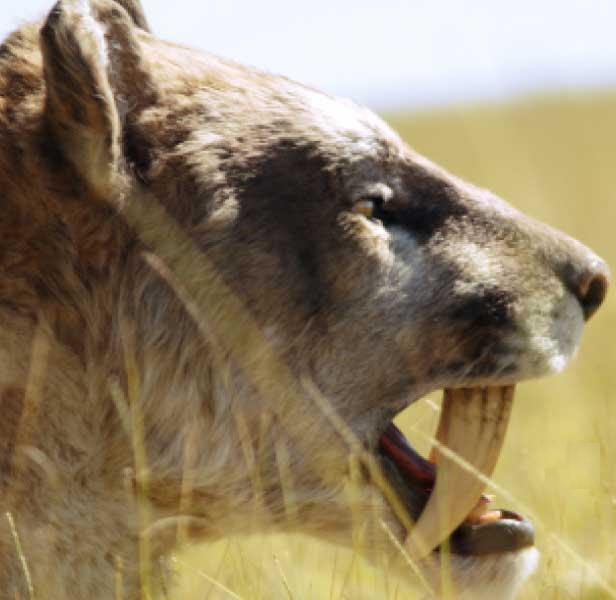
La semaine prochaine, du lundi au vendredi à 20h00, est diffusé Jurassic Fight Club, sur la chaine franco-allemande.
Pour ceux d'ailleurs, les trucs seront certainement visibles sur le site d'Arte.
Discussion:
 47 250
 42
42
 Dernière réponse
47 250
42
Dernière réponse
Posté par Lolo


Posté par Velou
Ah je savais pas
J'ai regardé un épisode sur Youtube ce matin, c'est un peu couillon comme truc...
J'ai regardé un épisode sur Youtube ce matin, c'est un peu couillon comme truc...

Posté par Nekarius
Dieu que j'ai été déçu. Je sais que Witmer, Holtz et Currie sont de bons paléontologues mais les trois quart de l'histoire de "Majungatholus" (= Majungasaurus) sont basés sur des suppositions non-fondées scientifiquement, et majoritairement proposées par Dinosaur George, qui lui est vraiment un imbécile...
Enfin, j'avais été prévenu par ce post écrit par Witmer dans la VRTPaleo list. Je copie son message ici car il est inaccessible sur le net (contrairement aux posts de la DML) et très intéressant. Cela vous donnera de très bonnes informations sur ce que l'on sait vraiment de Majungasaurus puisque Dave Krauze, le chef de l'équipe qui l'a découvert, donne son avis. Quant à Witmer, qui répond au message de Krause, il parle des avantages de cette série (pseudo)scientifique.
Ah oui, c'est en anglais évidement. Et j'ai pas le temps de le traduire en français, désolé.
Christophe
Date: Fri, 1 Aug 2008 09:17:25 -0400
From: Witmer@oucom.ohiou.edu
Subject: Jurassic Fight Club redux (was RE: One last? try)
To: VRTPALEO@usc.edu
As a participant in the Jurassic Fight Club premiere, I'd like to respond to a few of the points raised by Dave Krause, and use them as a springboard for my own perspective. I immediately phoned Dave to discuss some of his complaints. This response has two sections, the first dealing with the Cannibal Dinosaur episode and the second with more general issues.
1. "Cannibal Dinosaur"
I agree with Dave that there were factual errors that caused many of us to cringe, such as the plate tectonics and paleoenvironment, as well as a few fanciful elements presented as fact, such as the whole inbreeding thing. These errors are regrettable and better fact checking should have caught those. To my knowledge, none of the paleontologists involved served as technical advisor...we all were just talking heads. That said, I'm not going to run just yet from the production company that put it together. Despite taking liberties that we scientists might not take, I'm convinced that they've sought to make a compelling show that indeed flirts with the edges of available knowledge by emphasizing behavior but at the same time tries to provide some justification for those flirtations based on available science.
Dave noted that, for him, "Perhaps most disappointing is the fact that the show took interviews with respected professional vertebrate paleontologists with international reputations and twisted their words and conclusions to support statements and conclusions that are completely unsupported..." For my part, only once were my words distorted past my comfort level: I had pointed out that the cranial endocast shows that the optic lobe of the brain was not expanded (it's basically primitive), and so vision was not particularly emphasized...I went on to say that, still, vision must have been adequate because they clearly had visual display structures, but certainly they weren't emphasizing vision like, say, maniraptorans. They reduced this (admittedly nuanced) response to "poor vision." Not a big deal, but I silently Homered a "D'oh!" As Tom Holtz pointed out, much of the story line and animation was well underway by the time we scientists were interviewed, which is fairly typical with
this amount of labor-intensive CG animation. So, indeed, to a certain extent they probably had to fit the interviews within the story. For example, the show had depicted sexual dimorphism. They asked us to comment on sexual dimorphism, and, to their credit, they included statements from Phil Currie saying that we don't have an adequate sample size to be definitive for Majungasaurus, and statements from me saying that there is a diversity of cranial ornamentation but we can't be sure just what it means. Both Phil and I (and Pete Larson, too) were sympathetic to the idea of sexual dimorphism...the available evidence isn't inconsistent with dimorphism, many theropod species arguably have two morphs, and sexual dimorphism is very common in archosaurs. This "fitting us into the story" probably also extends to the B-roll (the non-interview footage; e.g., in my lab). Dave complained that "It showed a paleontologist measuring the size and spacing of the teeth of "Majungatholus" (one of the
primary pieces of evidence reported in the Rog!
ers et al
nibalism." Of course that "paleontologist" was me. But the director didn't ask me to break out calipers and measure teeth. Rather, they asked me (and my grad students) to "do what we do" and so we got out calipers, notebooks, and camera, sat at microscopes, etc. They then edited in that footage as the narrator talked about careful "measuring" (cut to dude with calipers) and "high-powered microscopes" (cut to dude at 'scope) being used in the cannibalism study. Sure, they should've filmed Ray Rogers' team, and I don't know why they didn't. But I don't see anything too insidious here...they just used available B-roll.
Dave also complained that "It reported anatomy and behavior of "Majungatholus" (bright coloration and fleshy protrusions in males, tails used as weapons, heads used as battering rams, poor vision, male courtship dances, females more agile than males) that we have not reported." Of course, if paleo-oriented shows had to limit themselves to what actually has been reported in the literature, then no shows would be made. But the items on his list mostly are reasonable inferences based on available data, and personally I think these shows are a legitimate opportunity for scientists to make those inferences. For instance, Majungasaurus was like many other dinosaurs in having structures that clearly were used in behavioral displays, and that these display structures were probably colorful and enhanced with soft tissues---that's all dirt-common in Diapsida. Likewise, based on my quick mental Mesquite, stereotyped courtship displays also would optimize near the base of Diapsida, if not more
basally. Based on the endocast studies, Majungasaurus' displays would have been pretty simple, as I said on the show (I dearly love the guy but it was dumb as a fencepost). The big-horn sheep "battering ram" reference indeed was a cringogenic extrapolation of my statement that the bumpy bone relates to skin structure consistent with combat...not super high-energy battering ram stuff, but rather using their heads as weapons (more on this later...we've haven't closed the book on Majungasaurus just yet).
2. The potential role of Jurassic Fight Club
Dave's post warns us to be wary "when approached for involvement in series with sensationalistic names like 'Jurassic Fight Club.'" Indeed, it's scary to place the portrayal of our science in the hands of others. Yet, we often need to do that---whether it's a press release on a paper or participating in a TV or radio show---if we want to reach beyond the narrow scientific community to the general public. It's not only the right thing to do, but has even been strongly encouraged (if not mandated) for those with or seeking NSF funding (see NSF 08-044 Dear Colleague Letter on Broader Impacts). We're all very concerned about how science is portrayed to the public, as well as declining science literacy, challenges to evolution, etc. Specifically, how do we reach those people that are less inclined to dip their toe in chilly scientific waters or are even afraid of science? Realistically (or cynically), probably *not* by making the shows that we scientists would want to watch or of which
we'd heartily approve. Sure, we may watch Nova, but hardly anybody else does, and the fact is that the Nova demographic is not the one we most need to reach. A couple years ago, I mixed it up with a TV producer about the growing problem of "infotainment," the dumbing down of science by the demands for entertainment. His response chillingly rang true: "The general public has lots of viewing options. If it weren't for the -tainment, nobody's gonna see your info-." Ouch! We all can agree that that may be a sorry state of affairs, but how do we address that?
I'm not claiming that Jurassic Fight Club is the answer. In fact, when I was first approached about the show and heard its title and premise, my initial response was in the OMG/WTF category. But it started to dawn on me that maybe this show had a chance to reach beyond the Nova demographic to those that might never think of watching a science show. Certainly, it taps into the current CSI-forensics craze. Moreover, it hits on one of the most common questions I get after a public talk, and that is the "versus" question: "Who would win in a battle between blankosaurus1 and blankosaurus2?" The "versus model" has been a winner...from the 1933 King Kong through to Jurassic Park and MTV's Celebrity Deathmatch. It just might be a successful "device" or "conceit" to engage a broad audience while still getting in some science. That is, if it's done well.
Of course, blatant errors shouldn't be permitted, but compromises have to be made to successfully reach a particular audience. Caveats may be the issue here. Scientific statements typically carry lots of caveats based on initial assumptions, methodological issues, missing data, etc. In fact, we scientists don't wallow in the caveats, we revel in them...we frankly love caveats. Caveats are sometimes the most interesting things, because they suggest new areas of inquiry. So, when we're interviewed, we tend to use "weak" terms like "appears," "seems," "based on available information," etc., and these are honest expressions of the caveats. However, for the public (and hence the media), our caveats are just noise that obscure the take-home message. The more caveats we introduce, the longer the sound bite and the lower the signal-to-noise ratio. So, my long-winded, caveat-laden (and to me, quite fascinating) statements about optic lobes got reduced to "poor vision." It's their bad for
getting it wrong, but also my bad for not communicating effectively enough. We scientists complain that TV shows often don't tell us where the science leaves off and the speculation begins, and certainly they can do better, but I think it partly relates to trying to increase the signal-to-noise ratio and hold the audience.
So, will Jurassic Fight Club be successful? That depends on your measure of success. Personally, I've come to seek a "net positive" for the portrayal of my science in the mainstream media (not just JFC). That is, I expect some errors, distortions, even caricatures, but, if the main scientific messages get through, if we reach a broad audience, and if we've enlightened or inspired even a few, then maybe we've achieved a net positive outcome. So far, the mainstream reviews of the premiere JFC episode have been generally pretty excellent, including the NY Times review that Dave mentioned. Moreover, it's received some grudging acclaim in the typically tough-to-please paleo blogosphere. Personally, I've received lots of enthusiastic comments from colleagues and regular folks, as well as kids and their parents. I don't know yet whether Jurassic Fight Club will be a net positive in my estimation. My participation was admittedly a risk. But maybe it'll be worth it if we can present some
science to people that wouldn't normally seek it out.
Larry Witmer
Ohio University
www.ohio.edu/witmerlab
-----Original Message-----
From: owner-VRTPALEO@usc.edu [mailto:owner-VRTPALEO@usc.edu] On Behalf Of Louis Bérubé
Sent: Wednesday, July 30, 2008 11:14 AM
To: VRTPALEO@usc.edu
Subject: Re: One last? try
(Reposting this for Dave.)
------------------------------------
Upon getting to work this morning, I fully expected to see a flood of outraged e-mails to the VP ListServer about the first, hour-long installment of the "Jurassic Fight Club," which aired last night on the History Channel. Surprisingly, there were none . . . . so let me kick things off.
First of all, I had no idea about this series (unless I have forgotten, which is entirely possible) until reading of it yesterday morning in a review sectino of the NY Times and finding out that the first segment was to be all about "Majungatholus" (correct name:
Majungasaurus - see SVP Memoir 8), a medium-sized abelisaurid theropod from the latest Cretaceous of Madagascar, and that it would focus primarily on its cannibalistic habits (as reported by Rogers et al. in Nature in 2003). So I watched it. Being arguably "old school" but also serving as leader of the Madagascar project (the "Mahajanga Basin
Project") that has resulted in discovery of the vast majority of the specimens of "Majungatholus", I found the show embarrassing to the profession of vertebrate paleontology, and to science in general. It was sensationalistic tabloid science at its very worst.
Here is a small sampling of errors and totally made-up stuff. The segment showed footage of paleontologists purportedly excavating fossils in Madagascar, none of which was shot in Madagascar. It showed footage of purportedly Madagascar fossils being prepared in the lab, none of which were from Madagascar. It showed a paleontologist measuring the size and spacing of the teeth of "Majungatholus" (one of the primary pieces of evidence reported in the Rogers et al. paper) who did not participate in the study of cannibalism. It reported discoveries of a "lush green Garden of Eden" in which Madagascar "teemed with plants" and "evergreens and conifer trees covered the landscape" when, in fact, despite our best efforts and those of others, we have not found a single plant fossil (other than a few algal spores) and, for numerous other reasons, have interpreted the Maevarano Formation in which the fossils of "Majungatholus" have been discovered to represent a semi-arid environment. It
exaggerated the size of "Majungatholus" considerably. It reported evidence of flash floods that transported bones for considerable distances when, in fact, Ray Rogers' work has reported thick, viscous debris flows that resulted in little or no bone transport. It reported anatomy and behavior of "Majungatholus" (bright coloration and fleshy protrusions in males, tails used as weapons, heads used as battering rams, poor vision, male courtship dances, females more agile than males) that we have not reported. It portrayed Madagascar as a small island "still drifting further out to sea" from Africa in the Late Cretaceous but there is incontrovertible evidence that it rifted from Africa in the Late Jurassic but resutured with the African plate 120 Ma; as such, its position relative to Africa was stable THROUGHOUT the Late Cretaceous and ever since. The tiny size of the island was used as evidence for confinement in a prison-like environment and support for interpretations of inbreeding
and cannibalism ("nothing left on menu except other "M!
ajungatho
izona. The segment closed with a lengthy fight scene, a "massive battle" between a male and female "Majungatholus" that went so far beyond the evidence it was laughable; the makers of Grand Theft Auto would have been hard-pressed to be more creative.
Perhaps most disappointing is the fact that the show took interviews with respected professional vertebrate paleontologists with international reputations and twisted their words and conclusions to support statements and conclusions that are completely unsupported and, in the process, did them and our discipline a disservice. Many of us, myself included, have been involved with the media and have had our words distorted and exaggerated. This first segment of the "Jurassic Fight Club," however, reached an incedibly new low and, in my opinion, made a mockery of the profession of vertebrate paleontology. We cannot have complete control over what gets included in such shows but I encourage caution and being vigilant when approached for involvement in series with sensationalistic names like "Jurassic Fight Club" because our well-intentioned enthusiasm to educate the public about the wonders of past life, about what we can (and cannot) learn from the fossils that we discover and study, and
from the sediments in which they were entombed, can all too easily result in the opposite of what we intend.
Dave Krause.
Department of Anatomical Sciences and
Department of Geosciences
Stony Brook University
Stony Brook, NY 11794-8081
Telephone: 631-444-3117
Fax: 631-444-3947
Founder, Madagascar Ankizy Fund
www.ankizy.org
----------
Edité le 26/05/2009 à 13:56 par Nekarius
Enfin, j'avais été prévenu par ce post écrit par Witmer dans la VRTPaleo list. Je copie son message ici car il est inaccessible sur le net (contrairement aux posts de la DML) et très intéressant. Cela vous donnera de très bonnes informations sur ce que l'on sait vraiment de Majungasaurus puisque Dave Krauze, le chef de l'équipe qui l'a découvert, donne son avis. Quant à Witmer, qui répond au message de Krause, il parle des avantages de cette série (pseudo)scientifique.
Ah oui, c'est en anglais évidement. Et j'ai pas le temps de le traduire en français, désolé.
Christophe
Date: Fri, 1 Aug 2008 09:17:25 -0400
From: Witmer@oucom.ohiou.edu
Subject: Jurassic Fight Club redux (was RE: One last? try)
To: VRTPALEO@usc.edu
As a participant in the Jurassic Fight Club premiere, I'd like to respond to a few of the points raised by Dave Krause, and use them as a springboard for my own perspective. I immediately phoned Dave to discuss some of his complaints. This response has two sections, the first dealing with the Cannibal Dinosaur episode and the second with more general issues.
1. "Cannibal Dinosaur"
I agree with Dave that there were factual errors that caused many of us to cringe, such as the plate tectonics and paleoenvironment, as well as a few fanciful elements presented as fact, such as the whole inbreeding thing. These errors are regrettable and better fact checking should have caught those. To my knowledge, none of the paleontologists involved served as technical advisor...we all were just talking heads. That said, I'm not going to run just yet from the production company that put it together. Despite taking liberties that we scientists might not take, I'm convinced that they've sought to make a compelling show that indeed flirts with the edges of available knowledge by emphasizing behavior but at the same time tries to provide some justification for those flirtations based on available science.
Dave noted that, for him, "Perhaps most disappointing is the fact that the show took interviews with respected professional vertebrate paleontologists with international reputations and twisted their words and conclusions to support statements and conclusions that are completely unsupported..." For my part, only once were my words distorted past my comfort level: I had pointed out that the cranial endocast shows that the optic lobe of the brain was not expanded (it's basically primitive), and so vision was not particularly emphasized...I went on to say that, still, vision must have been adequate because they clearly had visual display structures, but certainly they weren't emphasizing vision like, say, maniraptorans. They reduced this (admittedly nuanced) response to "poor vision." Not a big deal, but I silently Homered a "D'oh!" As Tom Holtz pointed out, much of the story line and animation was well underway by the time we scientists were interviewed, which is fairly typical with
this amount of labor-intensive CG animation. So, indeed, to a certain extent they probably had to fit the interviews within the story. For example, the show had depicted sexual dimorphism. They asked us to comment on sexual dimorphism, and, to their credit, they included statements from Phil Currie saying that we don't have an adequate sample size to be definitive for Majungasaurus, and statements from me saying that there is a diversity of cranial ornamentation but we can't be sure just what it means. Both Phil and I (and Pete Larson, too) were sympathetic to the idea of sexual dimorphism...the available evidence isn't inconsistent with dimorphism, many theropod species arguably have two morphs, and sexual dimorphism is very common in archosaurs. This "fitting us into the story" probably also extends to the B-roll (the non-interview footage; e.g., in my lab). Dave complained that "It showed a paleontologist measuring the size and spacing of the teeth of "Majungatholus" (one of the
primary pieces of evidence reported in the Rog!
ers et al
nibalism." Of course that "paleontologist" was me. But the director didn't ask me to break out calipers and measure teeth. Rather, they asked me (and my grad students) to "do what we do" and so we got out calipers, notebooks, and camera, sat at microscopes, etc. They then edited in that footage as the narrator talked about careful "measuring" (cut to dude with calipers) and "high-powered microscopes" (cut to dude at 'scope) being used in the cannibalism study. Sure, they should've filmed Ray Rogers' team, and I don't know why they didn't. But I don't see anything too insidious here...they just used available B-roll.
Dave also complained that "It reported anatomy and behavior of "Majungatholus" (bright coloration and fleshy protrusions in males, tails used as weapons, heads used as battering rams, poor vision, male courtship dances, females more agile than males) that we have not reported." Of course, if paleo-oriented shows had to limit themselves to what actually has been reported in the literature, then no shows would be made. But the items on his list mostly are reasonable inferences based on available data, and personally I think these shows are a legitimate opportunity for scientists to make those inferences. For instance, Majungasaurus was like many other dinosaurs in having structures that clearly were used in behavioral displays, and that these display structures were probably colorful and enhanced with soft tissues---that's all dirt-common in Diapsida. Likewise, based on my quick mental Mesquite, stereotyped courtship displays also would optimize near the base of Diapsida, if not more
basally. Based on the endocast studies, Majungasaurus' displays would have been pretty simple, as I said on the show (I dearly love the guy but it was dumb as a fencepost). The big-horn sheep "battering ram" reference indeed was a cringogenic extrapolation of my statement that the bumpy bone relates to skin structure consistent with combat...not super high-energy battering ram stuff, but rather using their heads as weapons (more on this later...we've haven't closed the book on Majungasaurus just yet).
2. The potential role of Jurassic Fight Club
Dave's post warns us to be wary "when approached for involvement in series with sensationalistic names like 'Jurassic Fight Club.'" Indeed, it's scary to place the portrayal of our science in the hands of others. Yet, we often need to do that---whether it's a press release on a paper or participating in a TV or radio show---if we want to reach beyond the narrow scientific community to the general public. It's not only the right thing to do, but has even been strongly encouraged (if not mandated) for those with or seeking NSF funding (see NSF 08-044 Dear Colleague Letter on Broader Impacts). We're all very concerned about how science is portrayed to the public, as well as declining science literacy, challenges to evolution, etc. Specifically, how do we reach those people that are less inclined to dip their toe in chilly scientific waters or are even afraid of science? Realistically (or cynically), probably *not* by making the shows that we scientists would want to watch or of which
we'd heartily approve. Sure, we may watch Nova, but hardly anybody else does, and the fact is that the Nova demographic is not the one we most need to reach. A couple years ago, I mixed it up with a TV producer about the growing problem of "infotainment," the dumbing down of science by the demands for entertainment. His response chillingly rang true: "The general public has lots of viewing options. If it weren't for the -tainment, nobody's gonna see your info-." Ouch! We all can agree that that may be a sorry state of affairs, but how do we address that?
I'm not claiming that Jurassic Fight Club is the answer. In fact, when I was first approached about the show and heard its title and premise, my initial response was in the OMG/WTF category. But it started to dawn on me that maybe this show had a chance to reach beyond the Nova demographic to those that might never think of watching a science show. Certainly, it taps into the current CSI-forensics craze. Moreover, it hits on one of the most common questions I get after a public talk, and that is the "versus" question: "Who would win in a battle between blankosaurus1 and blankosaurus2?" The "versus model" has been a winner...from the 1933 King Kong through to Jurassic Park and MTV's Celebrity Deathmatch. It just might be a successful "device" or "conceit" to engage a broad audience while still getting in some science. That is, if it's done well.
Of course, blatant errors shouldn't be permitted, but compromises have to be made to successfully reach a particular audience. Caveats may be the issue here. Scientific statements typically carry lots of caveats based on initial assumptions, methodological issues, missing data, etc. In fact, we scientists don't wallow in the caveats, we revel in them...we frankly love caveats. Caveats are sometimes the most interesting things, because they suggest new areas of inquiry. So, when we're interviewed, we tend to use "weak" terms like "appears," "seems," "based on available information," etc., and these are honest expressions of the caveats. However, for the public (and hence the media), our caveats are just noise that obscure the take-home message. The more caveats we introduce, the longer the sound bite and the lower the signal-to-noise ratio. So, my long-winded, caveat-laden (and to me, quite fascinating) statements about optic lobes got reduced to "poor vision." It's their bad for
getting it wrong, but also my bad for not communicating effectively enough. We scientists complain that TV shows often don't tell us where the science leaves off and the speculation begins, and certainly they can do better, but I think it partly relates to trying to increase the signal-to-noise ratio and hold the audience.
So, will Jurassic Fight Club be successful? That depends on your measure of success. Personally, I've come to seek a "net positive" for the portrayal of my science in the mainstream media (not just JFC). That is, I expect some errors, distortions, even caricatures, but, if the main scientific messages get through, if we reach a broad audience, and if we've enlightened or inspired even a few, then maybe we've achieved a net positive outcome. So far, the mainstream reviews of the premiere JFC episode have been generally pretty excellent, including the NY Times review that Dave mentioned. Moreover, it's received some grudging acclaim in the typically tough-to-please paleo blogosphere. Personally, I've received lots of enthusiastic comments from colleagues and regular folks, as well as kids and their parents. I don't know yet whether Jurassic Fight Club will be a net positive in my estimation. My participation was admittedly a risk. But maybe it'll be worth it if we can present some
science to people that wouldn't normally seek it out.
Larry Witmer
Ohio University
www.ohio.edu/witmerlab
-----Original Message-----
From: owner-VRTPALEO@usc.edu [mailto:owner-VRTPALEO@usc.edu] On Behalf Of Louis Bérubé
Sent: Wednesday, July 30, 2008 11:14 AM
To: VRTPALEO@usc.edu
Subject: Re: One last? try
(Reposting this for Dave.)
------------------------------------
Upon getting to work this morning, I fully expected to see a flood of outraged e-mails to the VP ListServer about the first, hour-long installment of the "Jurassic Fight Club," which aired last night on the History Channel. Surprisingly, there were none . . . . so let me kick things off.
First of all, I had no idea about this series (unless I have forgotten, which is entirely possible) until reading of it yesterday morning in a review sectino of the NY Times and finding out that the first segment was to be all about "Majungatholus" (correct name:
Majungasaurus - see SVP Memoir 8), a medium-sized abelisaurid theropod from the latest Cretaceous of Madagascar, and that it would focus primarily on its cannibalistic habits (as reported by Rogers et al. in Nature in 2003). So I watched it. Being arguably "old school" but also serving as leader of the Madagascar project (the "Mahajanga Basin
Project") that has resulted in discovery of the vast majority of the specimens of "Majungatholus", I found the show embarrassing to the profession of vertebrate paleontology, and to science in general. It was sensationalistic tabloid science at its very worst.
Here is a small sampling of errors and totally made-up stuff. The segment showed footage of paleontologists purportedly excavating fossils in Madagascar, none of which was shot in Madagascar. It showed footage of purportedly Madagascar fossils being prepared in the lab, none of which were from Madagascar. It showed a paleontologist measuring the size and spacing of the teeth of "Majungatholus" (one of the primary pieces of evidence reported in the Rogers et al. paper) who did not participate in the study of cannibalism. It reported discoveries of a "lush green Garden of Eden" in which Madagascar "teemed with plants" and "evergreens and conifer trees covered the landscape" when, in fact, despite our best efforts and those of others, we have not found a single plant fossil (other than a few algal spores) and, for numerous other reasons, have interpreted the Maevarano Formation in which the fossils of "Majungatholus" have been discovered to represent a semi-arid environment. It
exaggerated the size of "Majungatholus" considerably. It reported evidence of flash floods that transported bones for considerable distances when, in fact, Ray Rogers' work has reported thick, viscous debris flows that resulted in little or no bone transport. It reported anatomy and behavior of "Majungatholus" (bright coloration and fleshy protrusions in males, tails used as weapons, heads used as battering rams, poor vision, male courtship dances, females more agile than males) that we have not reported. It portrayed Madagascar as a small island "still drifting further out to sea" from Africa in the Late Cretaceous but there is incontrovertible evidence that it rifted from Africa in the Late Jurassic but resutured with the African plate 120 Ma; as such, its position relative to Africa was stable THROUGHOUT the Late Cretaceous and ever since. The tiny size of the island was used as evidence for confinement in a prison-like environment and support for interpretations of inbreeding
and cannibalism ("nothing left on menu except other "M!
ajungatho
izona. The segment closed with a lengthy fight scene, a "massive battle" between a male and female "Majungatholus" that went so far beyond the evidence it was laughable; the makers of Grand Theft Auto would have been hard-pressed to be more creative.
Perhaps most disappointing is the fact that the show took interviews with respected professional vertebrate paleontologists with international reputations and twisted their words and conclusions to support statements and conclusions that are completely unsupported and, in the process, did them and our discipline a disservice. Many of us, myself included, have been involved with the media and have had our words distorted and exaggerated. This first segment of the "Jurassic Fight Club," however, reached an incedibly new low and, in my opinion, made a mockery of the profession of vertebrate paleontology. We cannot have complete control over what gets included in such shows but I encourage caution and being vigilant when approached for involvement in series with sensationalistic names like "Jurassic Fight Club" because our well-intentioned enthusiasm to educate the public about the wonders of past life, about what we can (and cannot) learn from the fossils that we discover and study, and
from the sediments in which they were entombed, can all too easily result in the opposite of what we intend.
Dave Krause.
Department of Anatomical Sciences and
Department of Geosciences
Stony Brook University
Stony Brook, NY 11794-8081
Telephone: 631-444-3117
Fax: 631-444-3947
Founder, Madagascar Ankizy Fund
www.ankizy.org
----------
Edité le 26/05/2009 à 13:56 par Nekarius

Posté par Naldo
Moi j'ai surtout trouvé que ce genre d'émission "à grand spectacle" n'est pas digne d'apparaître sur Arte.
Malheureusement, c'est pas la première fois qu'on voit ça, et je crains que ça s'accentue (eh oui ils veulent faire de l'audience).
Ils feraient mieux de rediffuser "Sur la Terre des Dinosaures", plus sérieuse (malgré quelques grosses incohérences quand même)
Malheureusement, c'est pas la première fois qu'on voit ça, et je crains que ça s'accentue (eh oui ils veulent faire de l'audience).
Ils feraient mieux de rediffuser "Sur la Terre des Dinosaures", plus sérieuse (malgré quelques grosses incohérences quand même)
Posté par Tikémi
C'est avec des images 3D, ça raconte beaucoup d'âneries et d'hypothèses sensationnelles, on voit plein de méchants gnap-gnap qui mettent la pâtée à une brave vache (idiote et maladroite bien sûr), avec force sang de porc pour les effets spéciaux, comme dans les bons vieux films qui font peur.
Bref, rien que du bonheur pour les drôles.
Les autres, ben ils auront essayé, parmi tout ça, de repérer les infos réellement intéressantes...
Bref, rien que du bonheur pour les drôles.
Les autres, ben ils auront essayé, parmi tout ça, de repérer les infos réellement intéressantes...

Posté par Pyroraptor
Et aprés on s'étonne de voir des gosses ou meme des adultes arriver ici pour nous sortir des grosses annerie qu'on ne peut contredire parce que c'est passé à la TV les gars! 
J'ai jeté un oeil 5 min sur arte hier soir, attention au Nannotyranus lancensis tueur de T-rex mdr
J'ai jeté un oeil 5 min sur arte hier soir, attention au Nannotyranus lancensis tueur de T-rex mdr
Posté par Lolo
J'ai même pas vu un épisode 
C'est pas grave on dirait lol
Ps: dernier APP est paru
C'est pas grave on dirait lol
Ps: dernier APP est paru
Posté par Naldo
Je viens de voir un bout sur arte...
On voyait un "spécialiste" qui affirmait que les dinosaures étant des animaux à sang chaud, ils devaient faire attention à ne pas trop s'éxposer à la chaleur....
On voyait un "spécialiste" qui affirmait que les dinosaures étant des animaux à sang chaud, ils devaient faire attention à ne pas trop s'éxposer à la chaleur....
Posté par Neopilina
J'ai raté le premier : j'étais furax . A la fin deux deuxième , la déception est terrible . Mais celui de ce soir a réussi à m'intéresser ( il faut dire que j'aime bien les stégosaures ) . Et demain y ' a requin au programme , et on sait que j'adore . Ne sommes nous pas trop durs ? Est-ce que tout le monde se souvient , précisément , comment son ''virus'' l'a pris ? C'était pas en liant un article scientifique de haut niveau ( Moi , c'était un livre pour le Noël de mes six ans , ''Les monstres de la préhistoire'' , la restitution de l'iguanodon , par exemple , vaut son pesant de cacahuètes , appartient à l'histoire de la paléontologie ! ) . Les paléontologues de demain ont regardé ces émissions avec des yeux de Chimène , de merlans frits ! , et on a tous connu ça . Ce qu'il faut c'est susciter la passion , la curiosité , c'est après qu'on rationalise . Et il faut bien savoir que la victoire totale de la raison , de l'intelligence des choses , de la rationalité , c'est précisément la mise à mort de la Passion ( Un phénomène névrotique standard , constitutif , du Sujet humain ) . Toute Foi , Passion , a ses oripeaux , et on a tous la moquerie facile quant aux oripeaux de la Foi de l'autre , mais il y a ''d'abord'' une Foi , comme les nôtres , à ce titre . Ce que je ressens quand j'écoute ACDC d'autres le ressentent en écoutant François Valéry ou Julio . La conscience critique , jusqu'à nouvel ordre , n'est toujours que le cavalier , pas la monture . L'évolution continue , et pour notre espèce , le terme de celle-ci est la fin de cette dichotomie . 

Posté par Nekarius
Attends, j'ai pas compris l'argument là... Rien n'empêche les gamins d'aujourd'hui de tomber dans la dinomania en regardant des documentaires scientifiquement rigoureux sur les dinosaures. Et pas besoin de faire du sensationnel bourré d'erreurs pour plaire aux enfants. Pour ma part, je suis tombé dans la marmite en regardant les images d'un National Geographic sur les dinosaures qui les présentait alors avec toutes la rigueur scientifique de l'époque. Les gosses cherchent justement la vérité et les induire en erreur de quelque manière que ce soit est très dommage. L'on peut très bien concilier justesse et belles images et autant "susciter les passions et la curiosité" avec des choses exactes.
C'est qui ce disciple de Claude de Bortoli ?
Posté par Naldo
D'accord avec Nekarius.
Il n'y a aucune raison qu'on voie des soit disant spécialistes raconter des conneries à la télé.
Si c'est pour induire les gens en erreur c'est pas la peine. D'ailleurs cette dérive est à surveiller, car les pseudo-sciences sont en plein boom (attention je dis pas que ces documentaires sont de la pseudo science). Il faut juste réintroduire un peu de rigueur, et si ça pouvait rentrer aussi dans le langage de nos hommes politiques ça serait pas mal.
Bon voilà j'ai bien râlé je crois que je vais arrêter
Il n'y a aucune raison qu'on voie des soit disant spécialistes raconter des conneries à la télé.
Si c'est pour induire les gens en erreur c'est pas la peine. D'ailleurs cette dérive est à surveiller, car les pseudo-sciences sont en plein boom (attention je dis pas que ces documentaires sont de la pseudo science). Il faut juste réintroduire un peu de rigueur, et si ça pouvait rentrer aussi dans le langage de nos hommes politiques ça serait pas mal.
Bon voilà j'ai bien râlé je crois que je vais arrêter
Posté par Tikémi
Les enfants sont naturellement curieux. Bien sûr il faut les intéresser, mais sans pour autant les prendre pour des demeurés ! On assiste à des dérives dans certains services comm ou muséologique, à ne vouloir que du "ludique, sexy, et sensationnel". Même chose pour Jurassic Fight Club qui est un ramassis de tout et n'importe quoi (surtout n'importe quoi d'après l'épisode que j'ai vu), présenté avec des ooooh et des aaaah.
Prends la série des "Sur la terre des dinosaures" : bien sûr il y avait quelques libertés, mais c'était agréable à regarder tout en ne délivrant qu'un minimum de bêtises. D'ailleurs je pense qu'il y a quelques années beaucoup de jeunes ont commencé à s'intéresser à la paléontologie avec cette série. On n'est pas obligé d'en rajouter 3 couches pour attirer le chalant. Ouvre une expo sur les dinos, même sans robots etc, tu verras affluer des dizaines de milliers de visiteurs pendant des mois.
Vrai. Mais ça hérisse de voir des gaziers bourrer le crâne des drôles avec des âneries. Pourquoi ne pas leur apprendre tout de suite quelque chose de correct ?

Posté par Lolo
Quel dommage qu'ils ne viennent pas ici.
Posté par Tikémi
A cet âge-là, on ne les laisse pas non plus utiliser l'ordinateur il faut dire lol
Posté par Neopilina
Je ne sais pas qui est Claude de Bortoli . De toute façon, j'admets bien volontiers que la disgression finale de mon post n'a pas lieu d'être sur Dinonews , il y a des sites pour ce genre de thèmes ( Philosophie , sciences sociales et humaines ) , où ça ferraille dur , comme ici ! Ca ne se reproduira pas et je m'excuse sincèrement auprès de ceux que cela a pu irriter , froisser , agacer , ... . Amateur de requins , je l'ai dit . Avec le JPFC sur M . megalodon , on a effectivement touché le fond . On sait maintenant qu'il n'a rien à voir avec le grand requin blanc et bien on continue à simplement surdimensionner un grand blanc pour nous montrer un megalodon . On est d'accord , moi aussi , je voudrais voir des trucs corrects , c'est évident . Mais si ces nullités peuvent susciter des interêts , j'ai voulu croire que c'est toujours ça de pris . Je n'ai jamais fait l'apologie de l'inexactitude !!!!!! 
Posté par Naldo
T'inquiètes on a jamais pensé ça...
Posté par Cymbospondylus
De toute facon aprés avoir vu "jurassic fight club"on peut toujours vérifier les informations en cherchants sur des sites,des livres,des forums,comme ici.En étant un peut curieux et scientifique on cherche a vérifier si les informations sont vraies.
Posté par Lolo
Hier il y avait le truc sur Allosaurus Ceratosaurus...
Quelle idée de vouloir à tous prix faire se battre deux dinos comme cela...
j 'ai dans l'idée qu'ils devaient passer leur temp à s'éviter
Quelle idée de vouloir à tous prix faire se battre deux dinos comme cela...
j 'ai dans l'idée qu'ils devaient passer leur temp à s'éviter
Posté par Travis
Je l' ai vu avec le combat où le cératosaure perd ce soir il y a le ......j' ai oublié 
Posté par Neopilina
Bah , je continue à regarder , présentement , mais surtout ne le répétez pas ! 
 Répondre